Manufacturing Technology
A Powder Manufacturing Infrastructure Supporting Everything from Research to Mass Production
Engineered Powders possesses a wide range of manufacturing technologies, including atomization (water, gas, etc.), wet synthesis, heat treatment, grinding, dispersion, and classification.
By combining these technologies, we can precisely control particle size, shape, composition, and surface condition, enabling mass production with consistent quality.
With a manufacturing infrastructure capable of handling everything from the research and development stage through to mass production, we are able to provide customized solutions tailored to our customer’s needs and ensure a stable supply.
Material design capabilities to achieve the desired performance
Composition design is a technique for optimizing the types of elements and their ratios based on the properties required of powdered materials.
Mitsui Kinzoku Based on our accumulated technical expertise and extensive experience in material development, we design compositions that precisely control properties such as melting point, reactivity, electrical characteristics, and thermal behavior.
Particularly with alloy powders, fine-tuning the additive elements and their ratios enables us to improve oxidation resistance, stabilize thermal shrinkage behavior, reduce assembly temperatures, optimize wettability and electrical conductivity, and enhance joint reliability.
A major feature of this product is its ability to offer detailed customization, such as adjusting the melting point to suit the customer’s equipment specifications and intended applications.
We also excel at designing products that achieve the same performance using lower-cost materials.
Formulation design technology is utilized not only in improving existing products but also in developing new ones.
Examples of Performance Improvements Through Alloy Composition Design
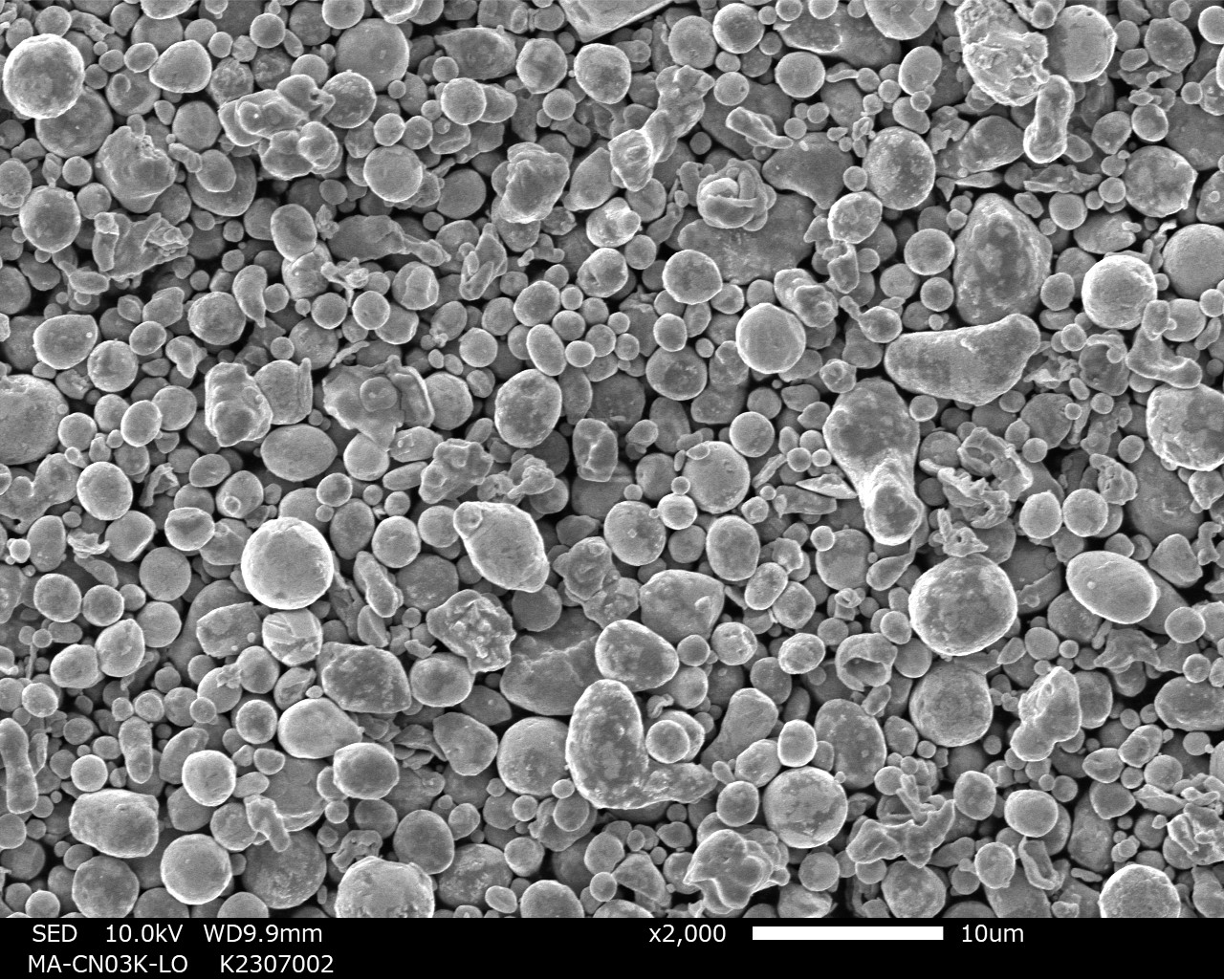
Copper-Nickel Alloy Powder – SEM Image
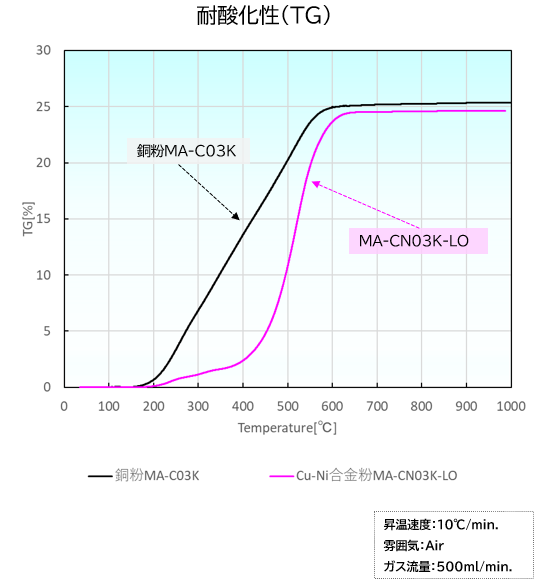
Compared to pure copper powder, copper-nickel alloys exhibit high oxidation resistance even at high temperatures.
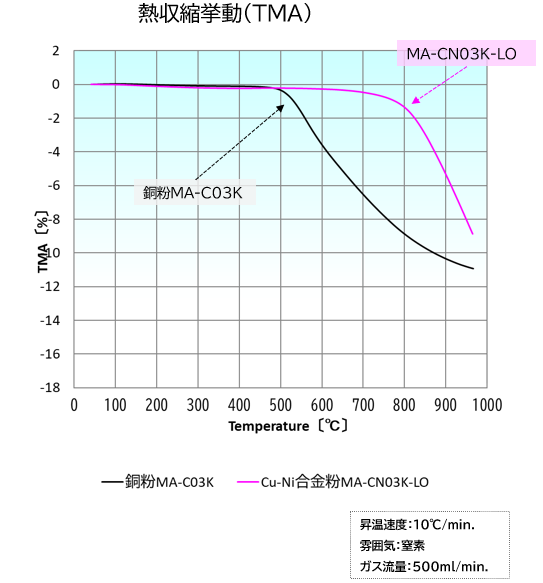
Compared to pure copper powder, copper-nickel alloys exhibit more stable thermal contraction behavior at high temperatures.
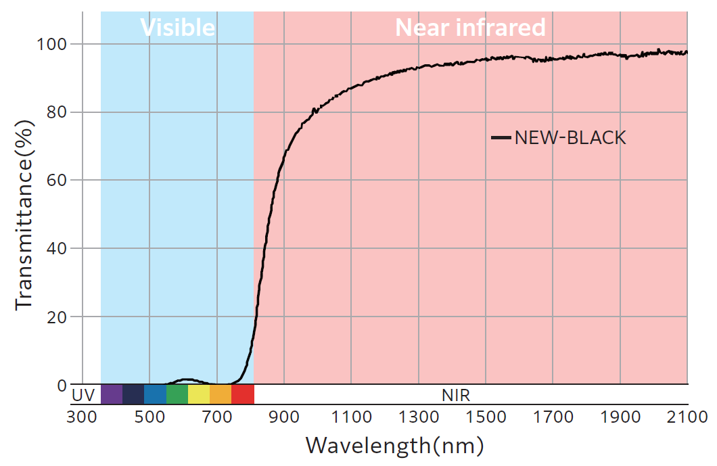
Examples of Performance Improvements Through Composition Design of Mixed Oxides
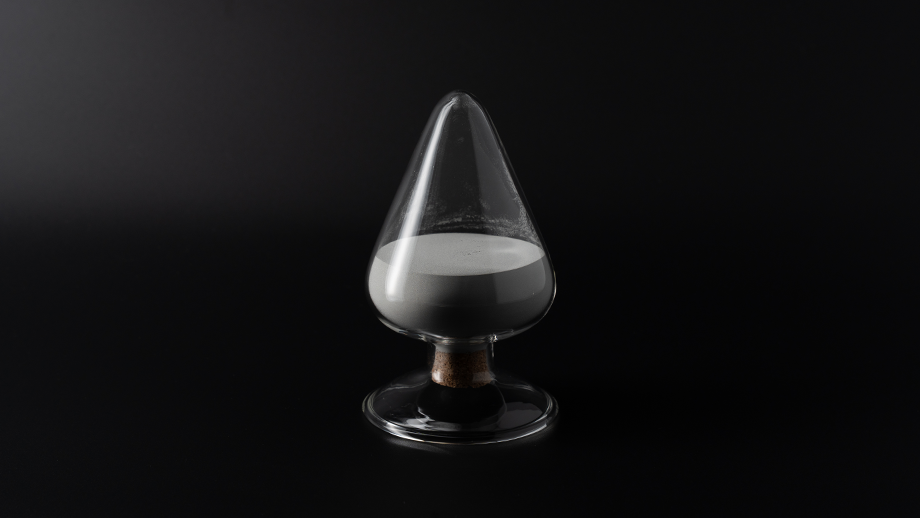
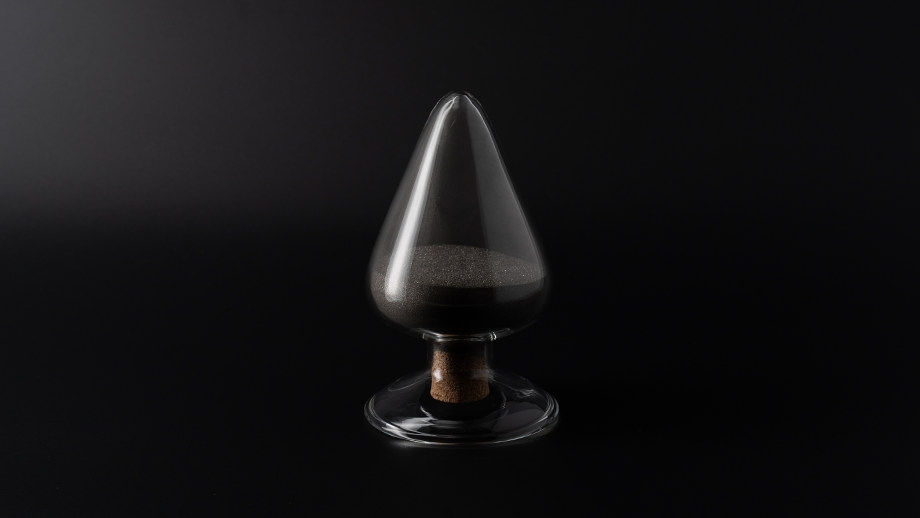
By modifying the composition of the composite oxide, it is possible to control the NIR transmission profile.
Related Products
Enhancing surface functionality to maximize material performance
Surface modification technology is a technique that involves applying organic or inorganic coatings to the surface of powders to impart and control properties such as conductivity, oxidation resistance, dispersibility, and resistance to degradation.
Mitsui Kinzoku Therefore, we select either organic or inorganic coatings based on the intended application and material properties to achieve the optimal surface design.
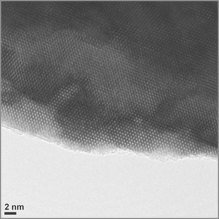
In organic coating, uniform surface treatment at the 1–2 nm level—using silane coupling agents and other materials—improves dispersion and affinity with resins, thereby enhancing processing stability in composite applications.
Inorganic coatings utilize nanoscale layers of metals such as Ag, Sn, and Ni, as well as oxides such as Ta₂O₅, SiO₂, Al₂O₃, and TiO₂, to improve oxidation resistance, control sintering behavior, extend battery life, and reduce silver consumption.
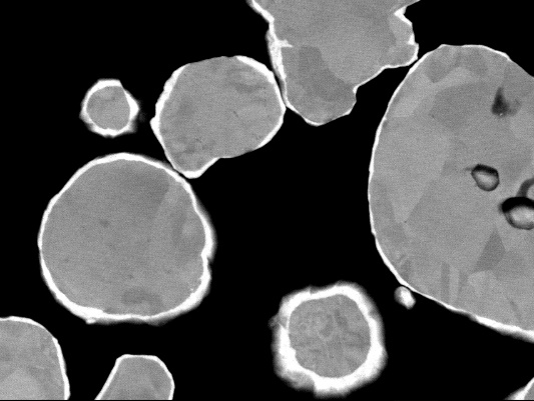
For example, in the case of silver-coated copper powder, applying a thin layer of silver to the surface of the copper powder allows us to significantly reduce the amount of silver used while maintaining conductivity and oxidation resistance comparable to that of silver.
Furthermore, in lithium-ion battery materials, an inorganic coating layer just a few nanometers thick stabilizes particle interfaces, helping to suppress battery degradation and extend battery life.
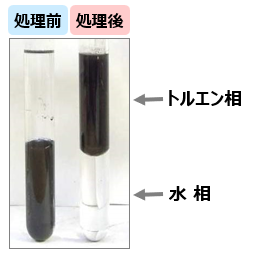
Surface Treatment Using Silane Coupling Agents
No surface treatment
Silane Treatment (Uniform Coating)
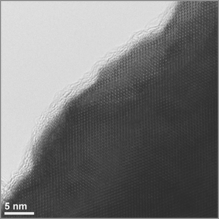
After silane treatment, the mixture separates into an aqueous phase and a toluene phase, improving the dispersibility and affinity of the resin.
Ag Coating on the Surface of Cu Particles
Applying a thin coating of Ag to Cu particles can give them conductivity comparable to that of Ag. This technology is intended to serve as an alternative to silver particles.
Related Products
Controlling Particle Shape to Optimize Processability and Performance
Our particle size and shape control technology optimizes wet synthesis, mechanical processing, and atomization conditions to tailor powder characteristics for specific applications.
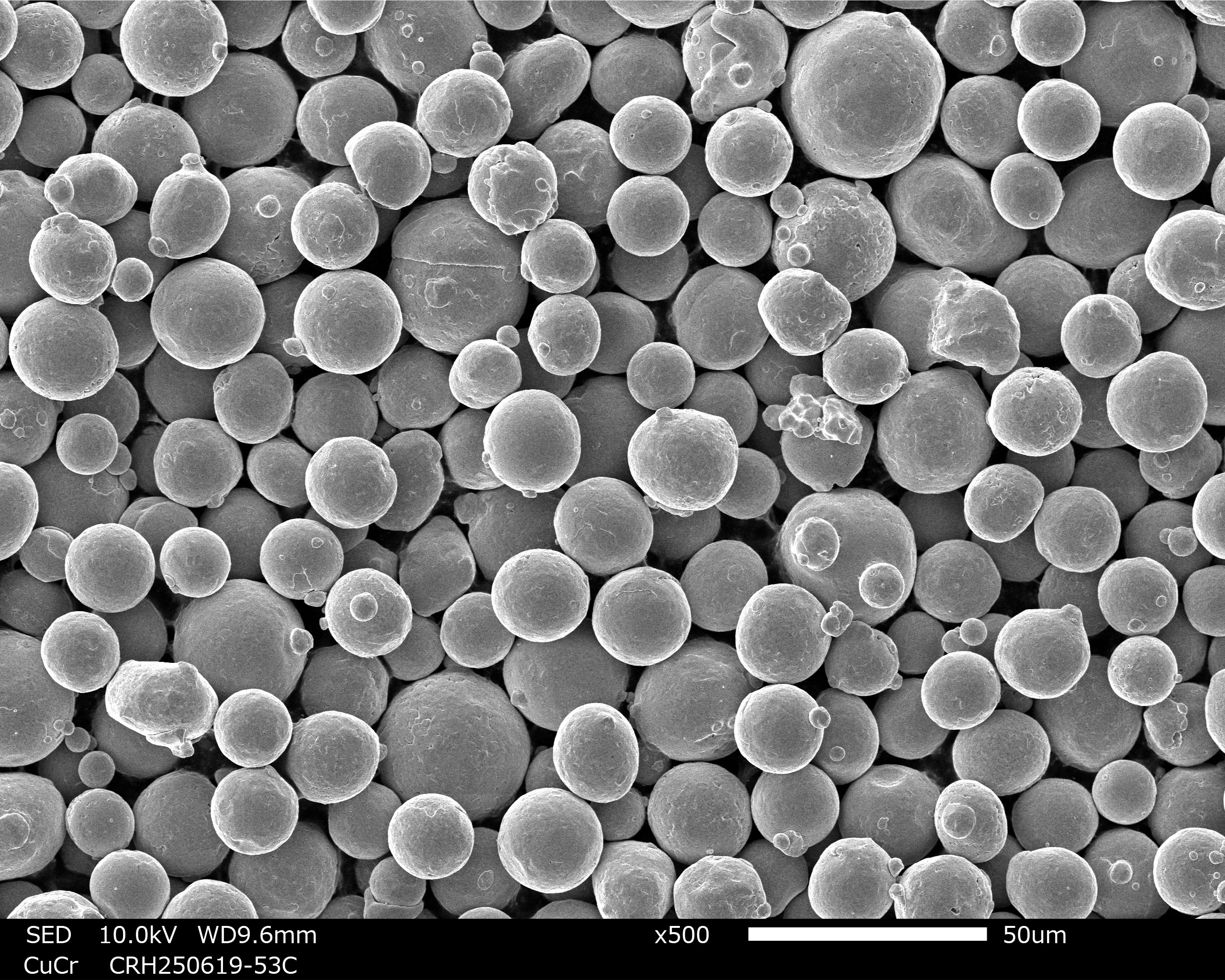
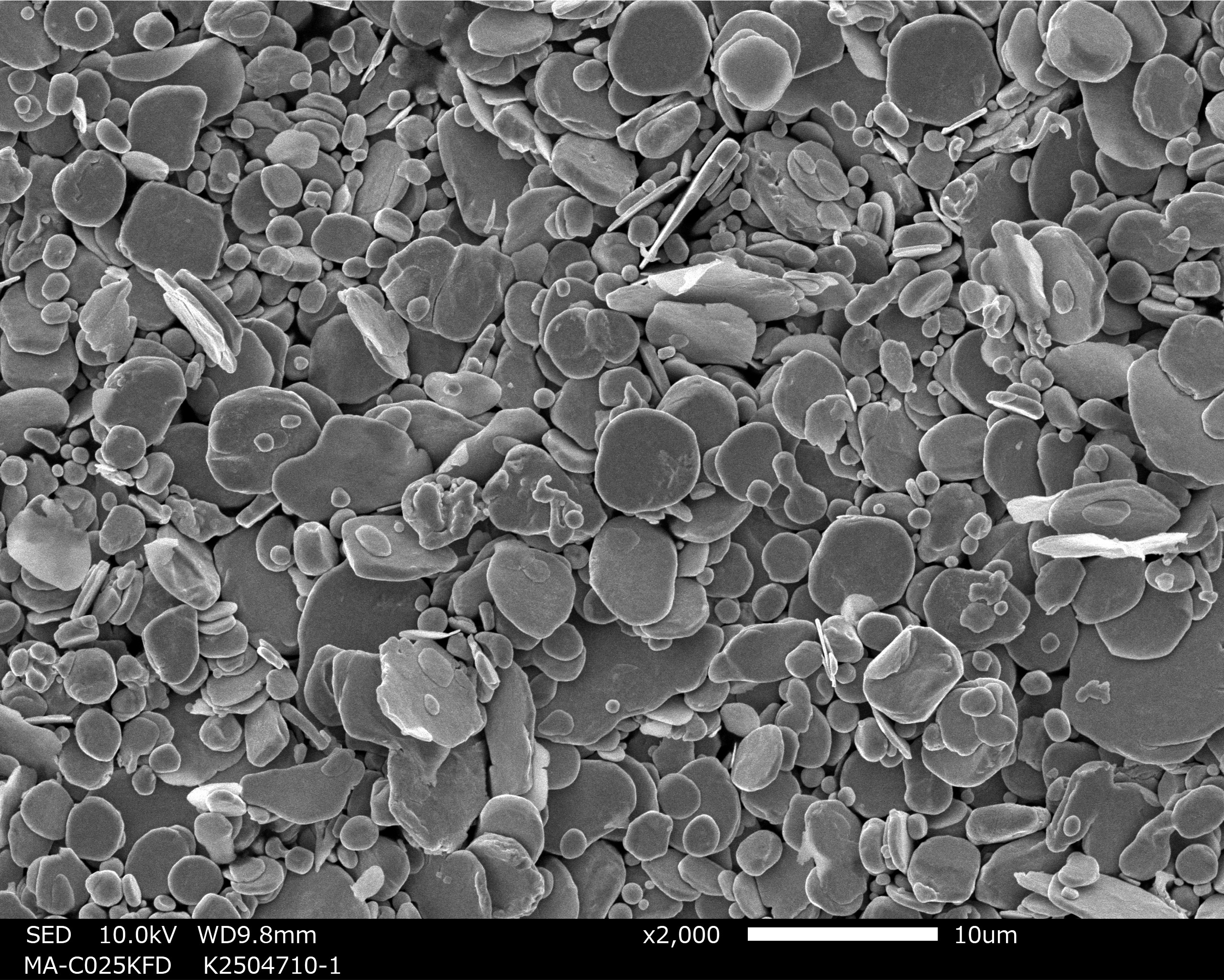
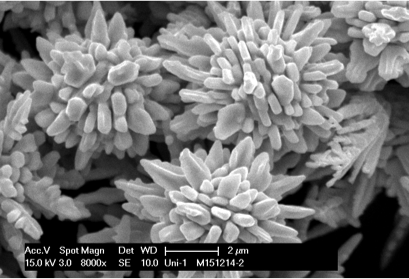
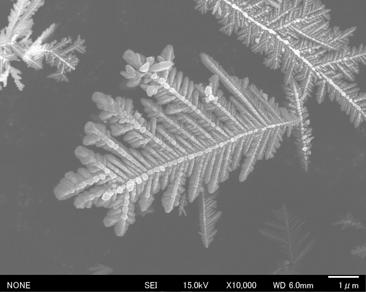
Mitsui Kinzoku offers a variety of shape control options, including spherical, flaked (flattened), and dendritic structures. Highly spherical particles improve flowability and reduce paste viscosity, ensuring uniform contact during firing and stabilizing sintering behavior. Conversely, flaked particles increase the contact area between particles, which enhances conductivity and facilitates low-temperature sintering. Depending on the application, we utilize either water or gas atomization, enabling us to provide a wide range of products—from fine powders in the 1.5–2 µm range to spherical powders for 3D printers.
Furthermore, to meet the demand for thinner external electrodes driven by MLCC miniaturization, we have achieved lower sintering temperatures and more stable electrode formation through the precise control of particle size and shape.
Spherical Copper-Chromium Alloy Powder (for 3D Printers)
Copper Flakes
Sea Urchin-Shaped Silver Powder (Special Shape)
Dendritic Metal Powder (Special Shape)
Related Products
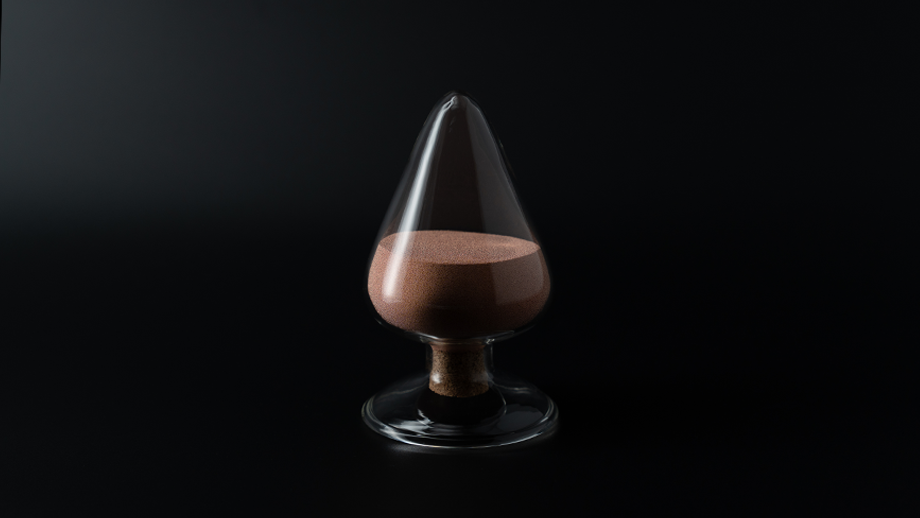
Designing the internal structure of particles to create new functions
Our structure-control technology regulates crystal and internal structures—including hollow and core-shell architectures—by optimizing particle synthesis conditions and additive formulation.
Increasing crystallinity can improve electrical conductivity, sinterability, oxidation resistance, and mechanical strength.
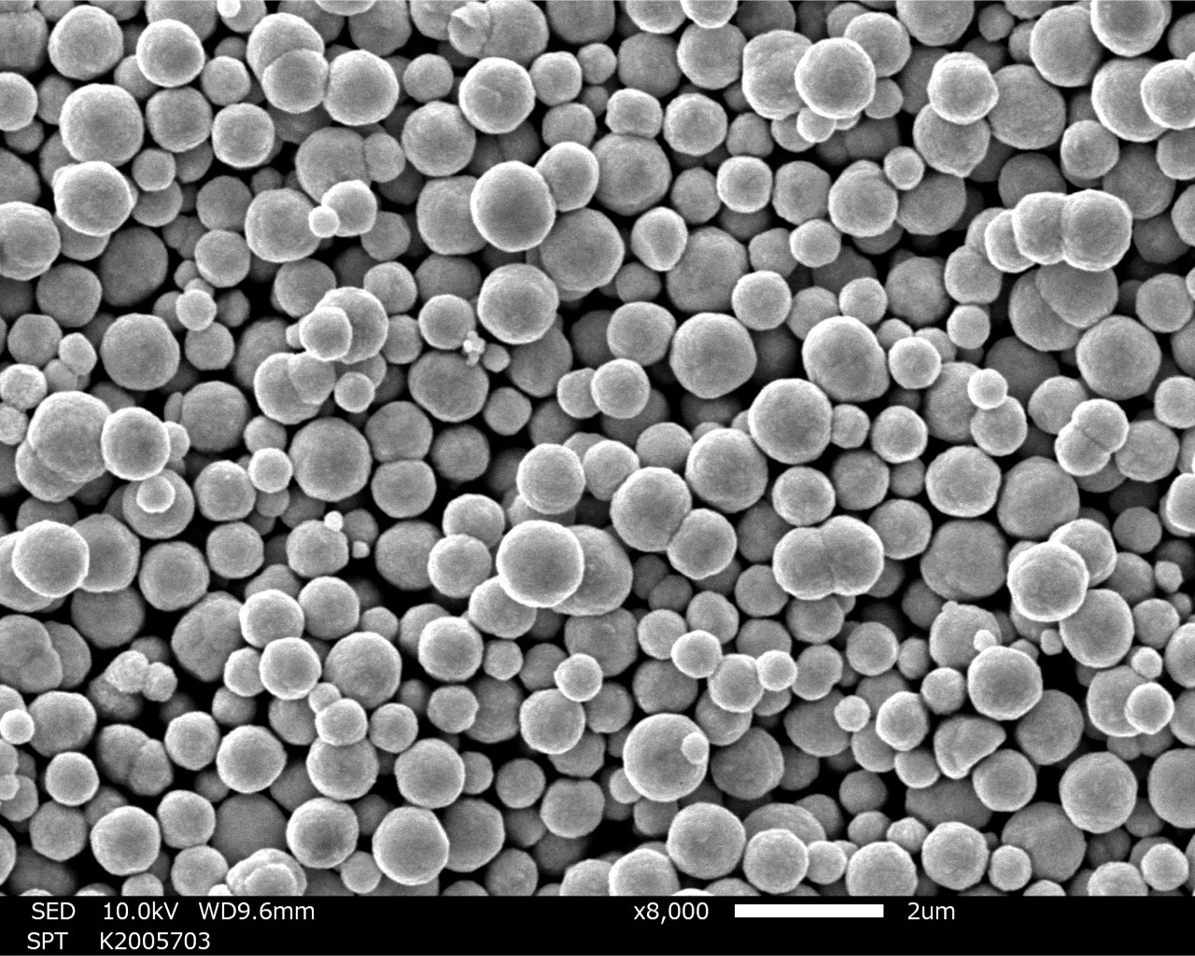
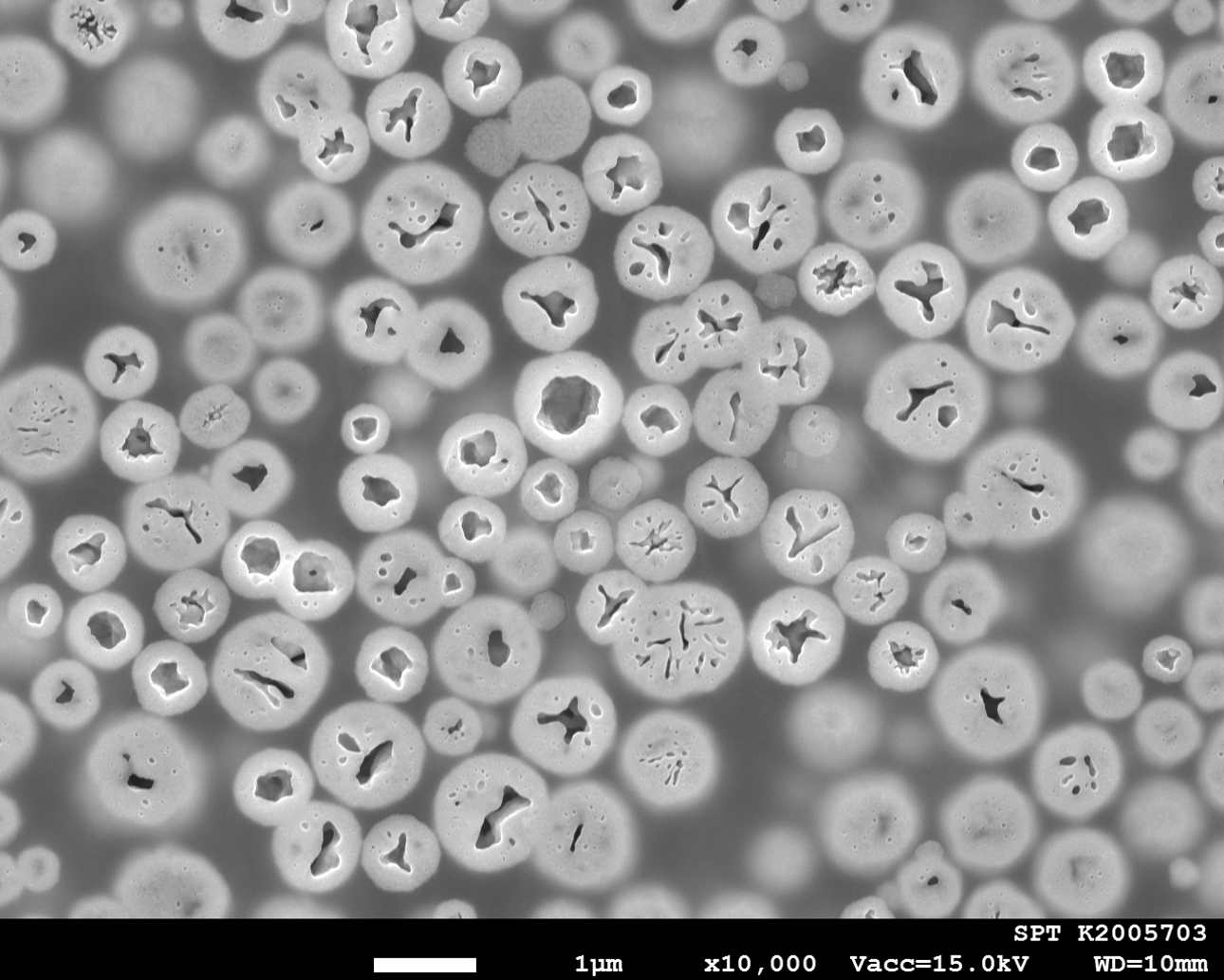
In hollow structures, incorporating voids within the particles allows for low-temperature sintering and stress relief while minimizing material usage, thereby contributing to cost reduction and improved reliability.
Hollow Ag powder
Cross-sectional image of hollow silver powder
Furthermore, in core-shell structures, the core material provides the optical and physical properties, while the shell layer forms a conductive network, thereby achieving both multifunctionality and material savings.
We can design structures tailored to specific applications, such as conductive oxide powders for antistatic films, battery materials, Silver Powder , and copper powder.
Schematic Diagram of a Core-Shell Structure
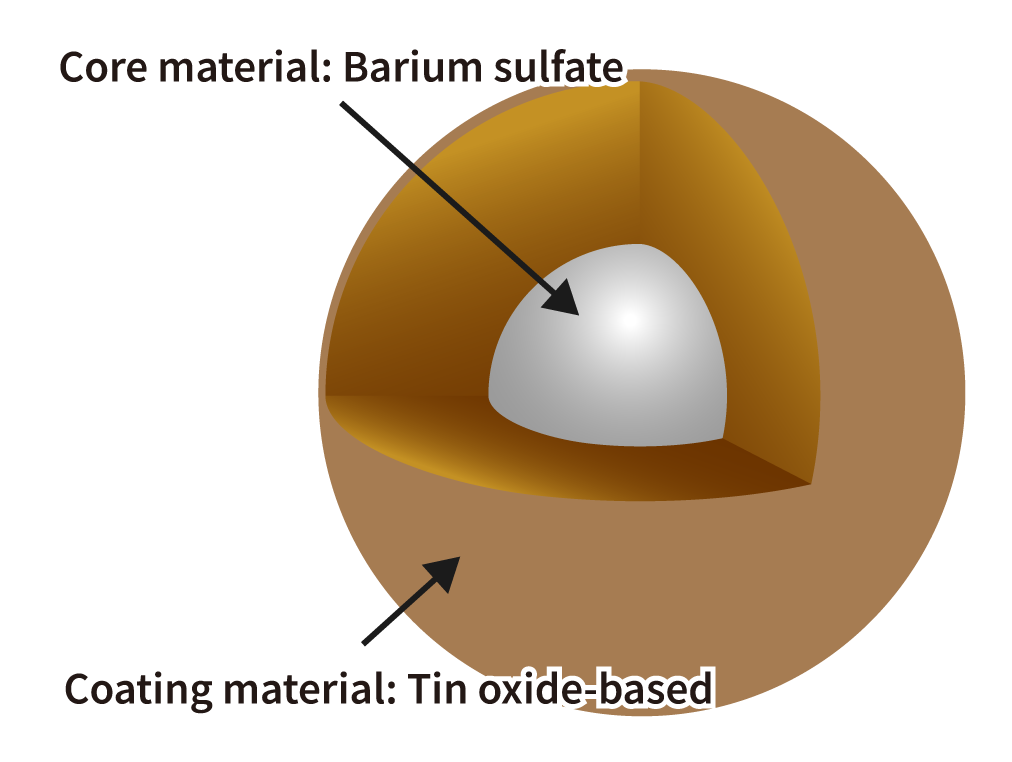
Core material: Barium sulfate × Shell: Antimony-doped tin oxide (conductive oxide)