

A Bonding Approach That Maintains Electrical Conductivity
By controlling the surface structure of copper foil, this technology achieves both high adhesion through physical bonding and stable electrical conductivity. Optimizing the size and shape of the surface roughness helps suppress the increase in transmission loss that can occur when adhesion is improved. Conductive design based on interfacial properties enables a performance balance tailored to each application.
Technology and Features
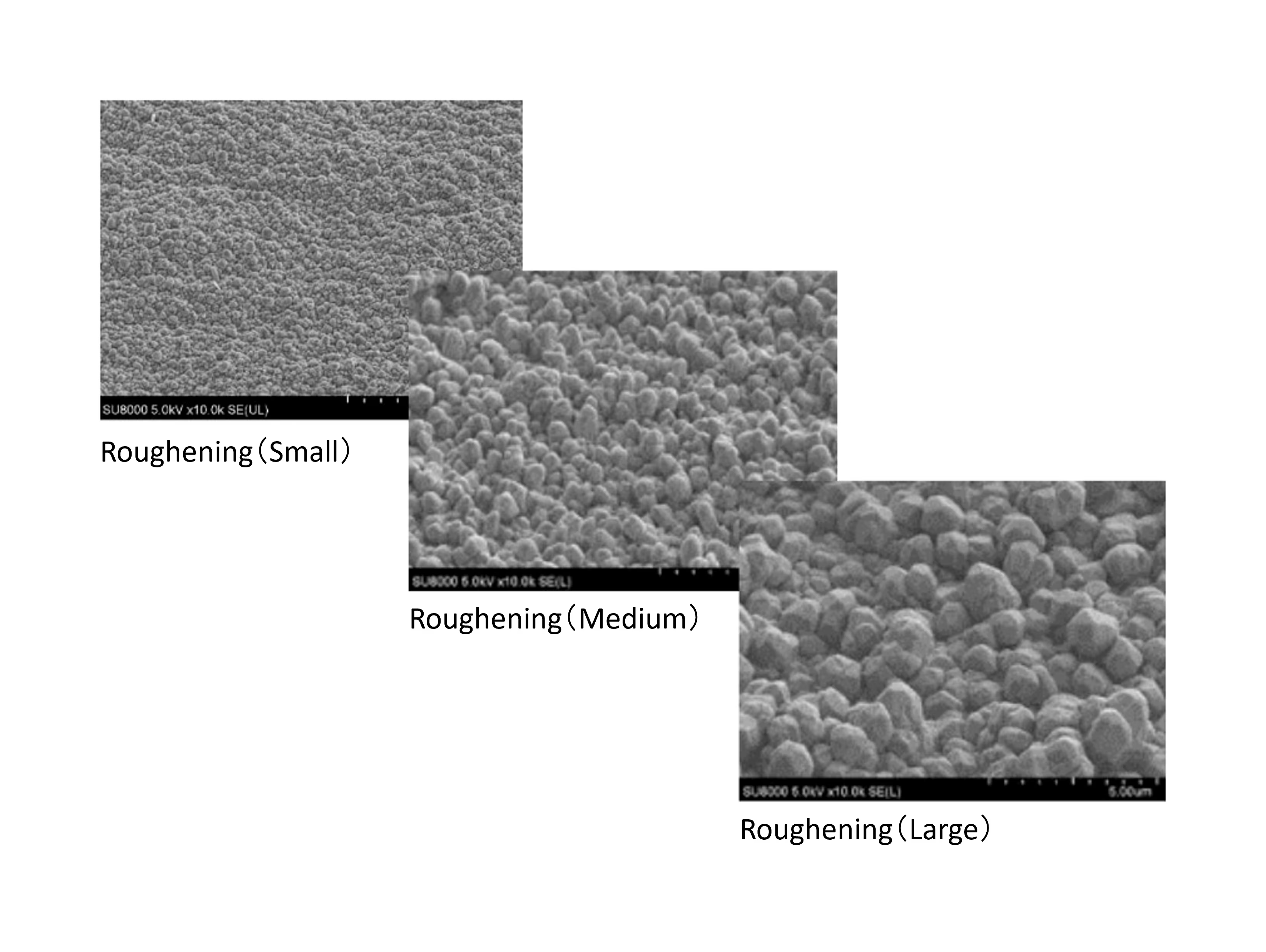
Anchor Bonding Technology through Surface Roughness Control
By controlling the size and shape of the roughened structure formed on the surface of copper foil, physical interlocking with resins, films, and other substrates can be optimized. Greater surface roughness improves adhesion, but it can also increase transmission loss. This technology enables surface design tailored to each application, with the key advantage of balancing adhesion and electrical properties.
Application Examples
This technology can be used as a conductive layer that bonds directly to resins, films, and various substrates, integrating functions such as wiring, electrodes, and shielding into structural components. Because the surface roughness design allows adhesion and transmission characteristics to be adjusted, it is expected to be applied to product designs that require both electrical performance and reliability.
Contact